

A kitchen display system that works in a quiet cafe can struggle in a restaurant that serves hundreds of covers an hour. High volume is a different test: more tickets on the line at once, faster service, and less room for any screen to slow the team down. This article focuses on what actually separates a capable system from one that cannot keep up, and what to check before you choose one for a busy kitchen. If you run a high-volume line, the parts worth reading closely are the ones about volume, the screen and the flow. If you are still comparing options, the same points are the ones to ask each supplier.
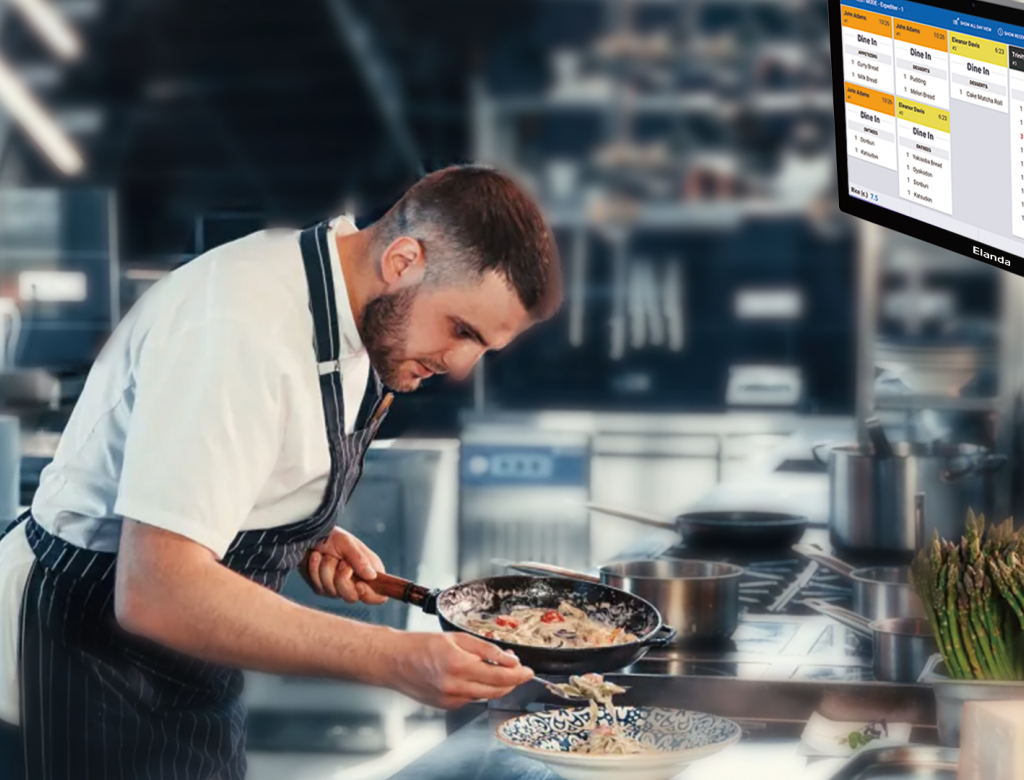
Why a kitchen display system matters at high volume
At high volume, the first thing to fail is the hand-off between orders. A kitchen display system keeps that hand-off automatic and consistent, so a surge of orders does not turn into a wall of paper tickets. When the screen updates in real time and the order sequence is fixed, the kitchen knows what is next without anyone asking. That clarity is what lets a busy line keep its pace through the worst of a rush, without tickets getting lost between stations. It also removes the noise of verbal callouts, which is the second biggest source of error in a crowded kitchen. With the system taking over the routine, the team stays focused on cooking instead of tracking paper, and the pass stays calm from start to finish.
What restaurant kitchen display systems should handle
restaurant kitchen display systems have to hold a large number of open orders without becoming hard to read. Confirm that the screen groups orders sensibly, shows preparation time for each item, and lets the team mark progress without slowing down. If the system cannot cope with the volume it is asked to display, it stops helping and starts getting in the way, which is the worst outcome for a busy service. The right system is the one that stays readable even when the tickets pile up, and that is exactly the test to apply during a pilot shift. Grouping matters as much as reading: when the system keeps the longest orders visible while the short ones move past, the line holds its rhythm, and the kitchen never loses track of what is waiting.
Choosing the kitchen display screen for a busy line
The kitchen display screen is the part the team looks at all shift, so it has to fit the space. Size, brightness and placement matter: a screen that is too small or poorly lit becomes hard to read under pressure. Confirm the screen can stay readable in a hot, steamy kitchen and that it handles fast updates without lag. A screen the team can read at a glance is the one that actually keeps the line moving, and it quickly becomes the natural focus of the kitchen. Placement also matters, so the screen should sit where every station can see it without turning around. The reading angle matters too, because a screen that faces a glare or sits too high loses its value at the worst possible time. Ask how the screen handles updates during a rush, because a lag of a second or two matters far more when the tickets are coming fast.
How a kds system for restaurants keeps the flow moving
A kds system for restaurants keeps the flow moving by ordering work the way the kitchen actually works. Courses can be shown separately, and items with different cook times can be arranged so nothing waits. When the system pushes the right work to the right station, the line moves in a steady rhythm instead of in bursts. That steady rhythm is what protects service quality when the orders keep coming, because the team is never working in a panic. A system that routes work by station rather than showing one long list keeps the whole line in balance, so no single cook is buried while others wait. This routing is the feature that matters most at high volume, and it is worth confirming before you buy. It is also the part that differs most between a simple ticket screen and a system built for a busy kitchen.
Measuring the return of a kitchen display system
The return on a kitchen display system at high volume comes from speed and accuracy together. Fewer remade dishes, faster turn times and a calmer line all reduce the cost per cover. Count the hardware, installation and software fees, then compare that against the time and food you save in a busy week. Where the volume is high, the system tends to pay for itself quickly, and the saving is easy to see in the first month. Keep a simple count of remade dishes before and after the change, and the number will usually tell the story on its own. Faster turn times also mean more covers served in the same shift, which is the other half of the return.
FAQ: What should you check before buying a kitchen display system?
Q1:How large a kitchen display screen do I need?
It depends on how many orders your line carries at once. Confirm the screen size and layout with your supplier against your busiest period, because that is where the screen has to hold together. Most kitchens settle on a size that suits the distance to the line and the volume of open orders.
Q2:Can a kds system for restaurants connect to my existing POS?
Most can, but confirm the connection path in writing. Ask how orders flow from your POS to the screen and who supports the integration, so a break does not leave the kitchen waiting. Clarify before you buy whether the software handles the connection or the hardware supplier does.
Q3:What makes restaurant kitchen display systems different for high volume?
High volume needs a system that holds many open orders, groups work by station and updates fast. A unit built for a low-traffic counter may not cope with the same volume, so match the system to your busiest day, not an average one.
Elanda, founded in 2016 in Shenzhen, China, is a global POS and self-service solution provider. The company supplies self service kiosks, POS terminals, KDS and peripherals to retail, hospitality, banking, logistics, healthcare and other industries worldwide, with a focus on reliable hardware, distinctive design and responsive support. OEM/ODM customisation is available for distributors, software providers and system integrators. Across every project, the aim is the same: hardware that matches the kitchen, the software and the way the team actually works, so it performs when the pressure is on. That fit is what turns a screen into a reliable part of a busy service.
If you are planning a kitchen display system for a high-volume kitchen and want to confirm the right screen and integration, our team can help you match the hardware to your order flow before you place an order. Tell us how your line runs today, and we will point you to the right configuration, and we will confirm the integration path before anything is ordered. A short conversation about your kitchen is usually enough to match the screen to the way you work, and to settle the details before the screens arrive.
