

What is a Thermal Printer?
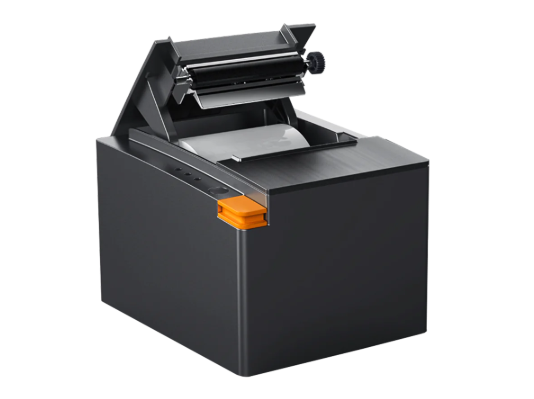
A thermal printer is a type of printer that uses a heated thermal printhead pressed against a medium to produce black text or images. The heated printhead either activates special chemically treated paper (called thermal paper) or transfers solid ink from a ribbon and bonds it to the medium, depending on the type of thermal printer. They are commonly used in producing labels, receipts, barcodes, ID badges and many more applications across a vast number of industries.
Thermal printing technology is commonly divided into two categories:
Direct Thermal Printing
Direct thermal printers print directly onto heat-sensitive paper. When the printhead heats specific areas of the paper, those areas turn black and form the desired image or text.
Key Features:
- No ink, toner, or ribbon required
- Simple operation and maintenance
- Lower operating costs
- Ideal for short-term applications
Common uses include:
- Retail receipts
- Parking tickets
- Shipping labels
- Event tickets
Thermal Transfer Printing
Thermal transfer printers use a heated printhead to transfer ink from a ribbon onto labels or other materials.
Key Features:
- Produces durable, long-lasting prints
- Resistant to moisture, chemicals, and UV exposure
- Supports various label materials
- Suitable for industrial environments
Common uses include:
- Product labels
- Asset tags
- Inventory tracking labels
- Industrial identification labels
How Does a Thermal Printer Work?
The working principle of a thermal printer depends on the printing technology used.
Direct Thermal Printing Process
Step 1: Data Transmission
The computer, POS system, or mobile device sends print data to the printer.
Step 2: Printhead Heating
The thermal printhead contains hundreds of tiny heating elements that activate according to the image or text being printed.
Step 3: Heat-Sensitive Paper Reaction
When heat is applied, the chemically coated thermal paper changes color, creating visible text and graphics.
Step 4: Media Feeding
The printer advances the paper continuously until the printing job is completed.
Thermal Transfer Printing Process
Step 1: Label and Ribbon Positioning
A ribbon coated with wax, resin, or a wax-resin mixture is positioned between the printhead and label material.
Step 2: Controlled Heat Application
The printhead heats selected points based on the digital print data.
Step 3: Ink Transfer
The ribbon coating melts and permanently adheres to the label surface.
Step 4: Finished Output
The printed label exits the printer with high-resolution and durable markings.
What are Thermal Printers Used For?
Thermal printers serve a wide range of industries due to their speed, reliability, and low operating costs.
Retail and Point-of-Sale (POS)
Retail businesses use thermal printers for:
- Sales receipts
- Price labels
- Coupon printing
- Customer transaction records
Logistics and Warehousing
Shipping and fulfillment centers depend on thermal printers for:
- Shipping labels
- Barcode labels
- Inventory management
- Tracking labels
Healthcare
Hospitals and laboratories utilize thermal printers for:
- Patient wristbands
- Prescription labels
- Medical sample tracking
- Pharmacy labels
Manufacturing
Manufacturers use thermal printers for:
- Product identification labels
- Compliance labels
- Asset management tags
- Packaging labels
Transportation and Ticketing
Thermal printers are widely used for:
- Boarding passes
- Parking tickets
- Event tickets
- Transit receipts
Thermal Printer Pros and Cons
Understanding the benefits and limitations of thermal printers helps businesses select the right solution.
Advantages of Thermal Printers
Fast Printing Speed
Thermal printers can generate labels and receipts quickly, making them suitable for high-volume environments.
Low Maintenance
With fewer moving parts and no ink cartridges in direct thermal systems, maintenance requirements are minimal.
Lower Operating Costs
Businesses save money on ink and toner replacement.
High Print Accuracy
Thermal printing produces sharp text, clear graphics, and highly scannable barcodes.
Compact Design
Many thermal printers are lightweight and space-efficient.
Disadvantages of Thermal Printers
Limited Color Printing
Most thermal printers are designed for monochrome printing.
Direct Thermal Print Fading
Direct thermal labels may fade over time when exposed to:
- Heat
- Sunlight
- Chemicals
- Friction
Media Compatibility
Thermal printers require specialized thermal paper or compatible label materials.
Higher Initial Cost
Industrial thermal transfer printers may have a higher upfront investment than basic inkjet models.
Selecting Your Thermal Printer by Model
Choosing the right thermal printer depends on your business requirements.
Desktop Thermal Printers
Best for:
- Small businesses
- Retail stores
- Offices
Features:
- Compact size
- Moderate print volume
- Easy installation
Industrial Thermal Printers
Best for:
- Warehouses
- Manufacturing facilities
- Distribution centers
Features:
- Heavy-duty construction
- High-volume operation
- Long service life
Mobile Thermal Printers
Best for:
- Delivery services
- Field operations
- Mobile sales teams
Features:
- Battery-powered
- Portable design
- Wireless connectivity
RFID Thermal Printers
Best for:
- Asset tracking
- Inventory management
- Supply chain operations
Features:
- RFID encoding capability
- Advanced tracking solutions
- Enhanced inventory visibility
Factors to Consider
Before purchasing a thermal printer, evaluate:
- Printing volume
- Label size requirements
- Print resolution
- Connectivity options
- Environmental conditions
- Media compatibility
- Budget and operating costs
Difference Between Thermal and Inkjet Printers
Many buyers compare thermal printers and inkjet printers before making a decision.
| Feature | Thermal Printer | Inkjet Printer |
|---|---|---|
| Printing Method | Heat-based | Liquid ink |
| Consumables | Thermal paper or ribbon | Ink cartridges |
| Printing Speed | Fast | Moderate |
| Maintenance | Low | Higher |
| Barcode Printing | Excellent | Good |
| Long-Term Cost | Lower | Higher |
| Color Printing | Limited | Excellent |
| Industrial Use | Ideal | Less common |
Choose a Thermal Printer If:
- You frequently print labels or receipts.
- You need fast, reliable barcode printing.
- You want lower maintenance costs.
- Your business requires high-volume printing.
Choose an Inkjet Printer If:
- You need vibrant color graphics.
- You print photos or marketing materials.
- Print durability is not the primary concern.
Conclusion
Thermal printers have become an essential tool for businesses that require fast, accurate, and cost-effective printing solutions. Whether using direct thermal technology for receipts and shipping labels or thermal transfer technology for durable industrial labels, these printers deliver reliable performance across many industries.
By understanding how thermal printers work, their applications, advantages, and limitations, businesses can choose the right model to improve efficiency, reduce operating costs, and enhance workflow productivity.
FAQs
How long do thermal printer labels last?
Direct thermal labels typically last 6–12 months under normal conditions, while thermal transfer labels can remain readable for several years depending on the material and environment.
Do thermal printers need ink?
No. Direct thermal printers do not require ink or toner. Thermal transfer printers use ribbons instead of ink cartridges.
Which is better: direct thermal or thermal transfer?
Direct thermal printing is ideal for short-term labeling, while thermal transfer printing is better for long-lasting labels exposed to harsh conditions.
Can thermal printers print barcodes?
Yes. Thermal printers are widely recognized as one of the best solutions for producing high-quality, scannable barcodes.
Are thermal printers suitable for industrial use?
Yes. Industrial thermal printers are specifically designed for manufacturing, warehousing, logistics, and other demanding environments.
